
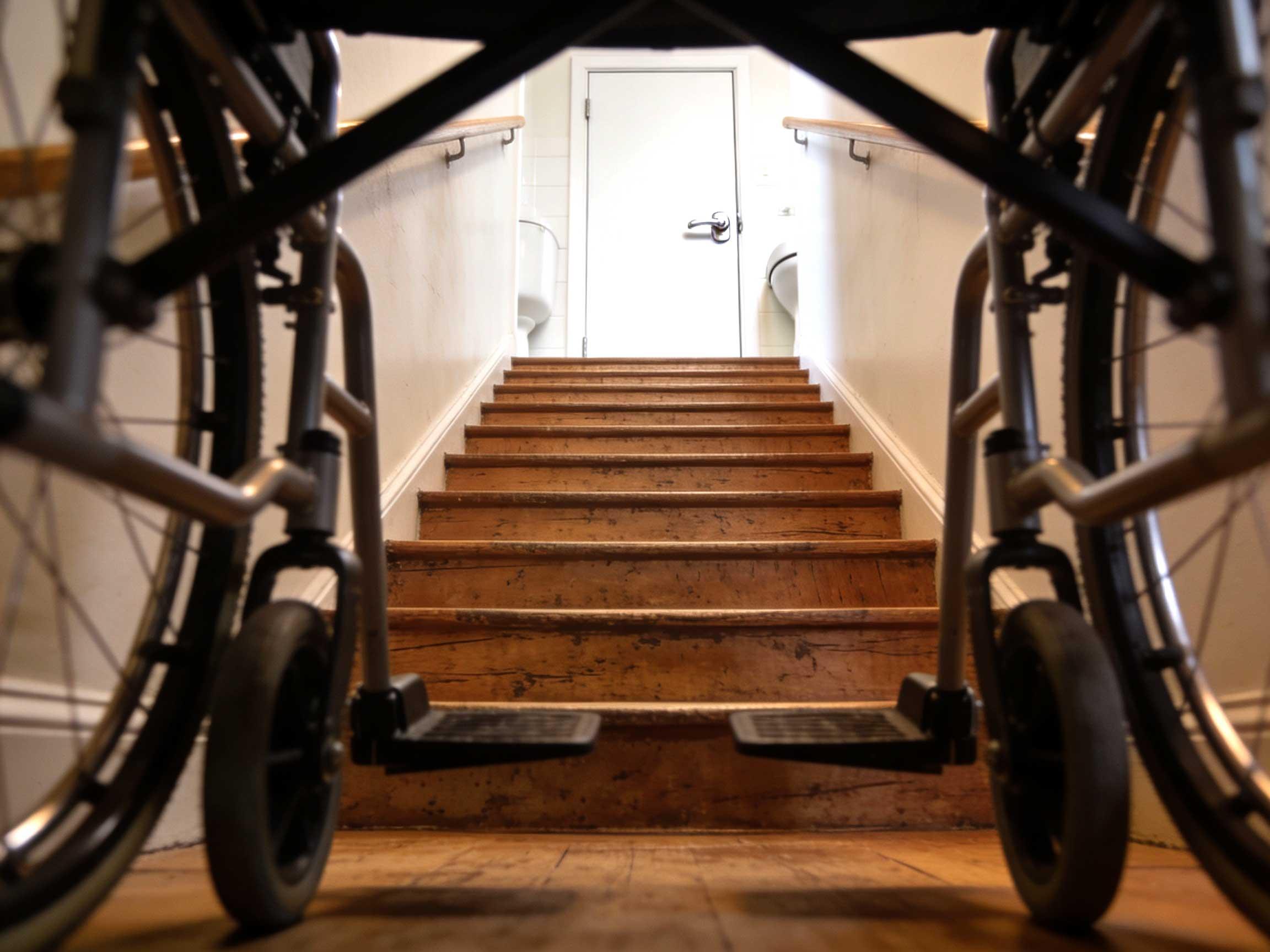
Ask most people to picture an accessibility feature and they will picture a ramp. Maybe an elevator. Maybe an automatic door. These are real and important, and the world is genuinely better when they exist.
They are also a small slice of what accessibility means.
The ramp is the part of access the built environment has learned to see. The rest of it is still invisible in most data, most regulations, and most apps. This post is about that rest.
Mobility is the visible barrier
Mobility access (wheelchairs, walkers, canes, strollers, temporary injuries) is where the cultural and regulatory story started, and for good reason. Steps, narrow doorways, and missing curb cuts make whole categories of places unreachable for people who depend on wheels.
But even within mobility, the data we have is shallow. "Wheelchair accessible: yes" tells you nothing about:
- whether the slope of the ramp is actually usable
- whether the accessible entrance is the main entrance or a back door
- whether the accessible restroom is on the same floor
- whether the route from sidewalk to seat has tight turns or temporary obstructions
- whether a folded wheelchair can fit between tables once you're inside
The world has agreed mobility matters. It has not yet agreed on what good data about it looks like.
Sensory access is the invisible barrier
A space can be perfectly wheelchair-accessible and still be unusable for millions of people because of how it sounds, looks, and smells.
For Deaf and hard-of-hearing people, access depends on whether staff can communicate by writing, whether menus are available without listening to a recitation, whether announcements are visual, whether the room is quiet enough for hearing aids to do their job. For blind and low-vision people, access depends on lighting, contrast, signage, tactile cues, and whether staff are prepared to describe a space rather than gesture at it.
Sensory access is also a question of load. Bright fluorescent lighting, loud music, strong scents, crowded layouts, screen glare, beeping payment terminals. These are not minor preferences. For people with autism, ADHD, PTSD, migraine disorders, or sensory processing differences, they decide whether a place is usable at all.
None of these conditions show up in a "yes/no" access flag.
Communication access is rarely measured
A surprising number of access needs are not about the building. They are about whether you can interact with the people inside it.
Can you order without speaking? Some people are nonverbal, some have laryngitis, some have anxiety severe enough to make placing an order difficult. Pointing at a menu, typing on a tablet, ordering through an app, or writing on paper are all real accommodations, and they vary enormously between businesses.
Can you communicate with staff if you don't share a spoken language? Can you ask questions of someone who reads lips? Can you summon help if you become unwell? These are not edge cases. They are everyday questions for the people they affect.
Environment changes the answer
A place is not accessible or inaccessible the way a wall is solid or hollow. It is accessible under certain conditions. The same restaurant might be perfectly usable at 2pm on a Tuesday and overwhelming at 8pm on a Friday. The same museum might be welcoming on a quiet morning and exhausting during a school visit. The same store might be navigable when the aisles are clear and impossible when seasonal displays appear.
Time of day. Day of week. Crowd levels. Construction. Temperature. Lighting. Music. Smell. These are all part of access, and they all change.
Why the "ramp model" of accessibility is holding us back
If accessibility is "having a ramp," then businesses can put up a sticker and be done. Maps can show a checkmark. Lawmakers can pass a law. Everyone can move on.
If accessibility is "the full set of conditions that determine whether a person can use this place," then we have a much harder problem, and a much more honest one. We need structured data with enough dimensions to describe the world as it actually is. We need that data to be refreshed, because the world keeps changing. And we need it to be usable not just by humans, but by the software systems that increasingly help us make decisions.
That is the model we are building toward at Open Accessibility. Not because ramps don't matter (they do), but because they were never the whole story.
What "more than ramps" looks like in data
A useful accessibility dataset, at minimum, has categories for:
- Mobility & physical access: entrances, routes, restrooms, seating
- Vision: lighting, contrast, signage, tactile features
- Hearing: sound levels, alternatives to spoken communication
- Sensory load: noise, crowding, scent, lighting, sensory-friendly hours
- Communication: nonverbal ordering, visual menus, staff readiness
- Cognitive: clarity of layout, predictability, available support
- Environment: temperature, air quality, queueing, outdoor seating
- Operational: temporary obstructions, current equipment status
Most of these are not in any database you've used today. They should be.